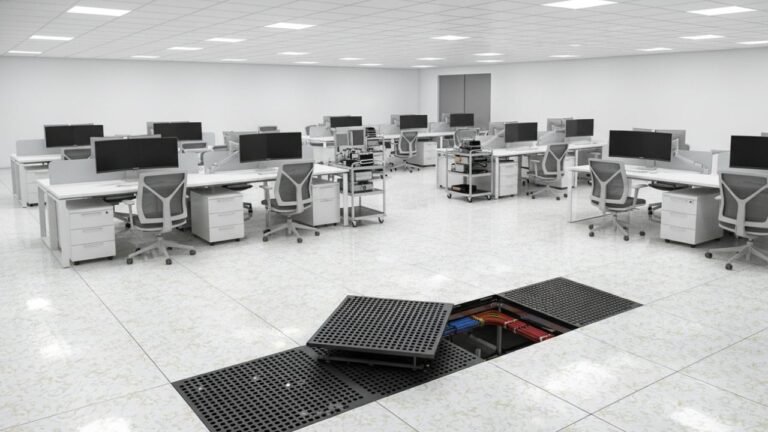
Modern offices rely on a growing number of electrical and digital connections. Computers, monitors, network equipment, meeting room systems, and other devices all need cables to work properly. When these cables are left exposed or bundled around workstations, they can make an office look untidy and complicate cleaning, maintenance, and future layout changes.
This is where a false flooring system can make a practical difference. By creating a usable space beneath the finished floor, it allows cables to be routed out of sight while keeping them accessible when changes or repairs are needed.
For offices that regularly update their technology or rearrange workstations, false flooring offers a convenient way to manage cables without repeatedly disturbing the main floor.
What Is False Flooring in Modern Offices?
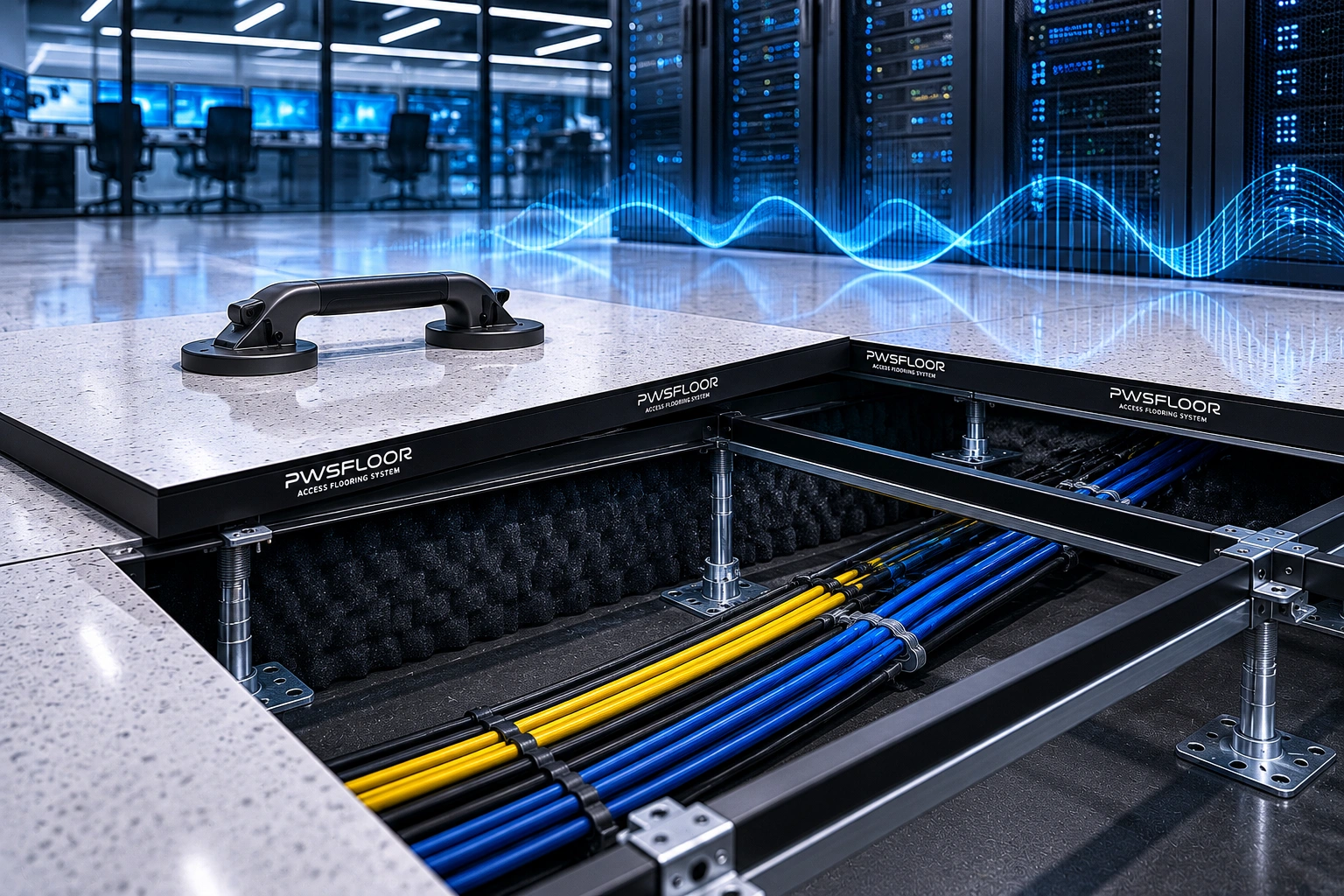
False flooring, also known as raised access flooring, is a flooring system installed above the original floor using supporting pedestals and floor panels. The space between the structural floor and the raised surface provides a route for electrical cables, data connections, and other building services.
Unlike conventional flooring, which leaves most cables dependent on wall conduits or surface trunking, a raised floor can provide more flexibility when planning office connections.
The system is useful in corporate offices, IT departments, meeting rooms, server rooms, and other workplaces where several devices need reliable connectivity.
Ways False Flooring Helps Manage Office Cables
1. Keeps Cables Out of Sight
Loose cables running beneath desks, across walkways, or along walls can make even a well-designed office look cluttered. False flooring provides space to route cables beneath the finished floor instead of leaving them exposed.
This helps create a cleaner appearance, particularly in open-plan offices where multiple workstations share electrical and network connections.
A tidy cable arrangement also makes it easier for housekeeping teams to clean around workstations without dealing with unnecessary cable obstructions.
2. Reduces Cable-Related Safety Risks
Cables stretched across walkways can create tripping hazards for employees and visitors. They may also become damaged when chairs, furniture, or cleaning equipment repeatedly come into contact with them.
A properly planned raised access flooring system helps keep cables away from normal walking areas. Cable routes can be organised beneath the floor, with suitable access points provided where connections are required.
However, the flooring itself does not guarantee electrical safety. Cable installation, separation, protection, and access must follow applicable electrical and building regulations.
3. Makes Office Layout Changes Easier
Office layouts often change as teams expand, departments move, or new workstations are introduced. With conventional flooring, relocating power and data connections may require additional surface trunking, wall work, or other modifications.
False flooring makes these changes easier by providing access to the space beneath the floor panels.
For example, when a company adds workstations to an open office, technicians can plan new cable routes beneath the raised floor and bring connections up at suitable locations. The exact amount of work depends on the existing cable infrastructure and floor design.
This flexibility makes raised flooring a useful option for businesses expecting future workplace changes.
4. Simplifies Cable Maintenance and Repairs
Finding a damaged cable in a crowded office can take time, especially when several connections run together. An organised underfloor cable arrangement helps maintenance teams locate and access the relevant routes more efficiently.
Individual floor panels can be lifted where access is required, allowing authorised technicians to inspect connections, replace cables, and carry out maintenance without removing large sections of conventional flooring.
Proper cable labelling and route documentation remain important. Without them, an underfloor space can become just as difficult to manage as a poorly organised cable tray.
5. Supports Better Cable Organisation
Modern offices may have separate requirements for electrical power, internet connectivity, telephone lines, and audiovisual equipment. Mixing these services without a clear plan can complicate maintenance and future upgrades.
A well-designed false flooring system allows cable routes to be planned according to the building’s needs. Suitable containment, separation, and identification can help technicians understand which cables serve particular departments or devices.
The design should also consider the floor’s available depth, access points, cable capacity, and applicable requirements for electrical and fire safety.
6. Helps Prepare Offices for Future Technology
Businesses regularly introduce new equipment, upgrade networks, and expand digital services. A flooring system designed around current requirements alone may not provide enough room for future additions.
Raised access flooring can offer greater flexibility by providing an accessible route for additional cables, subject to the available underfloor space and the system’s design capacity.
Planning for future requirements during installation can reduce the need for disruptive modifications later.
How to Choose the Right False Flooring System for Cable Management
Before selecting a false flooring system, businesses should consider more than the appearance of the finished surface.
Cable capacity: Check whether the available underfloor space can accommodate current and expected cable routes.
Floor panel access: Choose a suitable arrangement that allows authorised technicians to reach important connections.
Load requirements: Ensure the panels and supporting structure are appropriate for office furniture, equipment, and expected loads.
Floor finish: Consider finishes such as high-pressure laminate (HPL) based on durability, appearance, and the intended application.
Safety and compliance: Plan cable containment, electrical separation, grounding where applicable, and fire-stopping provisions according to relevant standards.
Future flexibility: Consider possible workstation relocations, additional network points, and technology upgrades.

Conclusion
False flooring offers a practical way to manage cables in modern offices by keeping connections concealed, improving access for maintenance, and making future layout changes easier. It also helps reduce cable clutter around workstations and supports a more organised workplace.
The best results come from combining a suitable raised access flooring system with well-planned cable routes, proper labelling, and safe installation practices.
For businesses looking to improve office cable management, PWSFloor false flooring solutions can be considered as part of a flexible and well-organised workplace design.
Why PWS Floor?
In mission-critical environments, flooring is more than just a surface to walk on. False Flooring can play an important role in keeping cables organized, improving accessibility, and making future upgrades easier. From data centers and control rooms to airports and power facilities, a well-designed Raised Floor System provides the flexibility these spaces need.
Choosing the right False Flooring Tiles and working with an experienced False Flooring Manufacturer can help ensure the system meets the facility’s operational and load requirements. With the right Access Flooring solution, businesses can create infrastructure that is easier to maintain today and better prepared for tomorrow.
Frequently Asked Questions (FAQ)
How does false flooring help with cable management?
False flooring creates an accessible space beneath the finished floor where electrical and data cables can be routed, organised, and maintained without leaving them exposed across the office.
Is raised access flooring suitable for modern offices?
Yes. Raised access flooring can suit open-plan offices, corporate workspaces, IT departments, and meeting rooms that require organised cable routing and flexibility for future changes.
Can cables be added after false flooring installation?
Yes, additional cables can often be routed through the underfloor space. However, this depends on available space, floor panel access, cable capacity, and applicable safety requirements.
Does false flooring reduce cable-related hazards?
It can reduce tripping risks by keeping cables away from walkways. Proper cable containment, installation, and maintenance are still necessary to maintain a safe working environment.
What should businesses consider when choosing false flooring?
Businesses should assess cable capacity, panel accessibility, load requirements, floor finish, maintenance needs, safety regulations, and the possibility of future office expansion.